
When Pain Won’t Let Go
Some injuries and chronic pain just won’t resolve on their own. You’ve rested it, stretched it, iced it, maybe even pushed through it — and it keeps coming back. Often that’s because the tissue itself is stuck in a stalled state of healing, with poor blood flow and built-up scar tissue keeping it from fully repairing. Shockwave therapy is designed to break that cycle and jump-start your body’s natural healing response.
Request an AppointmentWhat Is Shockwave Therapy?
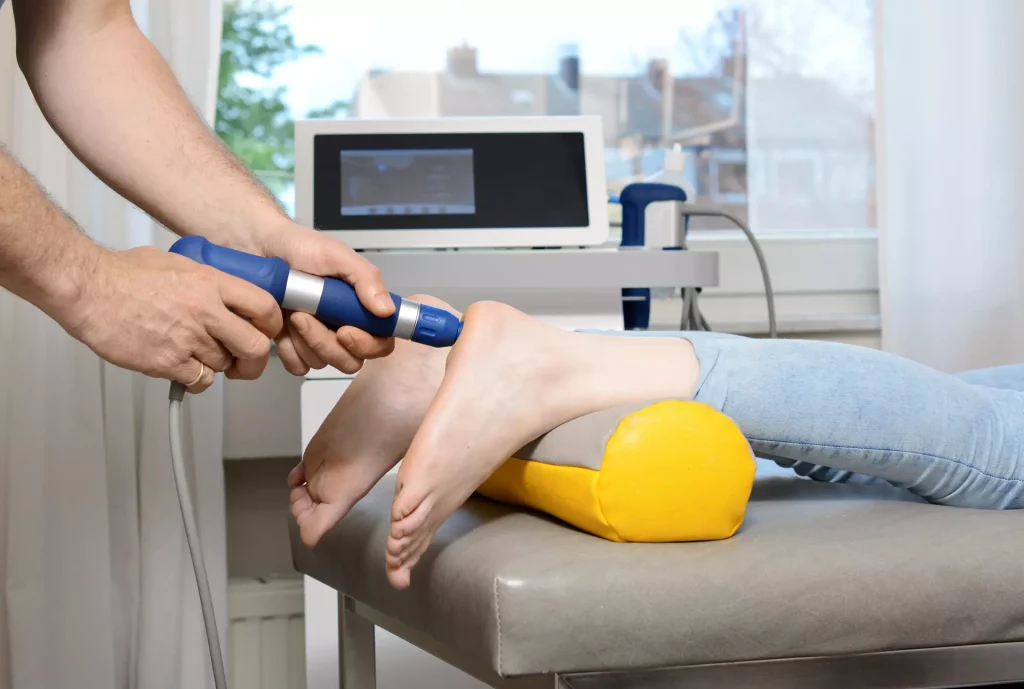
Shockwave therapy (also called acoustic wave therapy) uses targeted, high-energy sound waves delivered directly into injured or painful tissue. Those waves stimulate blood flow, break down scar tissue and calcification, and trigger your body’s own repair and regeneration process at a cellular level. It’s non-invasive, drug-free, and performed right here in our office — no needles, no surgery, no downtime.
How It Works
- Stimulates new blood vessel formation and improves circulation to the injured area
- Breaks down scar tissue, adhesions, and calcium build-up
- Reduces pain by calming overactive pain signaling in the tissue
- Triggers a renewed healing and regeneration response where it had stalled
- Helps restore mobility, strength, and function over the course of care
Conditions Shockwave Commonly Helps
Shockwave is especially effective for chronic, stubborn soft-tissue conditions, including:
- Plantar fasciitis and heel pain
- Achilles tendinopathy / tendinitis
- Tennis elbow and golfer’s elbow
- Rotator cuff and shoulder tendinopathy
- Patellar tendinitis (jumper’s knee)
- Hamstring and other chronic tendon injuries
- Shin splints
- Hip bursitis and trochanteric pain
- Calcific tendinitis
- Chronic neck, shoulder, and lower-back muscle tension and trigger points
Not sure if your specific injury qualifies? That’s exactly what an evaluation is for — we’ll assess your situation and tell you honestly whether shockwave is a good fit for you.
Who It’s For
Shockwave therapy is a great option for athletes recovering from injury, active adults dealing with nagging tendon or joint pain, and anyone who has been frustrated by chronic pain that hasn’t responded to other approaches. If you’ve been managing pain for months and want a path toward actually resolving it, shockwave may be the tool that gets you there.
What to Expect
Quick & Convenient
Each session typically takes only a few minutes, and you can return to your normal day right afterward there’s no downtime.
A Short Series
Most people receive a series of sessions spaced over several weeks, since the therapy works by progressively stimulating healing. We’ll recommend a specific number based on your evaluation.
Comfortable & Non-Invasive
You may feel a tapping or mild intensity during treatment, and we adjust to your comfort. No medication, no needles, no incisions.
Common Questions
Does shockwave therapy hurt?
Most people tolerate it very well. You’ll feel a tapping sensation and some intensity over the treated area, and we adjust the settings to keep you comfortable throughout. Any tenderness afterward is usually mild and short-lived.
How soon will I see results?
Some people notice improvement after the first few sessions, while deeper or longer-standing injuries take a full series and a bit of time as the tissue regenerates. Because shockwave stimulates a healing process, results often continue to build even after your sessions are complete.
How many sessions will I need?
It depends on the condition and how long it’s been present. Many chronic conditions respond well to a series of sessions over a few weeks. We’ll give you a clear recommendation after evaluating your specific injury.
Is there any downtime?
No. Shockwave is non-invasive, and you can return to your normal activities right away. We may offer guidance on activity in between sessions to support the best results.
Is it covered by insurance?
As an out-of-network practice, we keep shockwave pricing transparent and will walk you through the cost before you begin. We’re happy to answer any questions about what care will involve.